
Defence Minister Rajnath Singh claimed Jawaharlal Nehru wanted to build the Babri Masjid using public funds, but Sardar Vallabhbhai Patel prevented it. He also lauded Patel's contributions and criticized Nehru's approach to national issues.

'Three Congress leaders have sold party tickets for crores of rupees.'

The rupee declined 22 paise to 87.41 against the US dollar in early trade on Thursday after the latest tariff announcements from the US weighed on emerging currencies, including the rupee. Forex traders said the latest tariff announcements from the US have sent shockwaves through global markets, strengthening the dollar.

The rupee tumbled 3 per cent against the US dollar in 2024 as concerns over slower economic growth and a stronger greenback in global markets weighed, but it was among the least volatile currencies in the world and the headwinds may be less intense in the coming year.

A woman labourer in Madhya Pradesh's Panna district has discovered eight diamonds in a mine, potentially worth lakhs of rupees at auction.

Here are 7 countries where Indian Rupee has a higher value, making them best destinations for Indian travelers looking for a budget-friendly trip

Quarterly earnings, macroeconomic data announcements and global trends will drive the Indian stock markets in a holiday-shortened week, analysts said. Stock markets would remain closed on Wednesday for the Guru Nanak Gurpurab holiday.

With this, a total of seven people have been arrested in connection with Garg's death.

From Rs 73k to over Rs 1.2L between January-December 2025 -- is buying gold in 2026 still sensible?

Reserve Bank Governor Sanjay Malhotra on Wednesday said there is no proposal to levy any charge on UPI transactions.

India's leading agriculture commodity exchange, the National Commodity & Derivatives Exchange (NCDEX), has decided to acquire around a 20 per cent stake in a new commodities and financial derivatives exchange being set up in Sri Lanka, subject to regulatory and governmental approvals. The move aims to deepen NCDEX's footprint in the financial ecosystem of its neighbouring country.
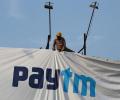
Paytm (One 97 Communications Ltd), India's full-stack merchant payments leader serving MSMEs and enterprises, has launched a fully redesigned version of its flagship app, integrating artificial intelligence-driven features to streamline and personalise everyday transactions for its users.
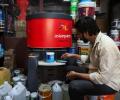
Asian Paints reported a good performance for the second quarter (July-September) of 2025-26 (Q2FY26), with some help from base effects, despite strong competition and extended monsoon. Volume grew in low double digits in the key domestic decorative paints, and value in that segment grew by 6 per cent. Ebitda (earnings before interest, taxes, depreciation, and amortisation) grew 21 per cent year-on-year (Y-o-Y), and PAT (profit after tax) grew 14 per cent. Asian Paints also defended market share better after several quarters where it had lost ground to Birla Opus.
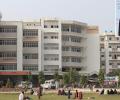
The Enforcement Directorate on Tuesday launched searches against the Al Falah University of Faridabad and its promoters and linked persons as part of its investigation related to the Red Fort area terrorist blast case, sources said.

New investors should gradually build a 5 to 10 per cent allocation to gold.

This election is a thank you note to Nitish Babu from a grateful Bihari people, notes Sheela Bhatt.

The Indian rupee depreciated a modest 2.9 per cent in the first nine months of the current fiscal, performing better than other currencies like the Canadian Dollar, South Korean Won and the Brazilian Real, according to the Economic Survey tabled in Parliament on Friday. The value of the Indian Rupee (INR) is market-determined, with no target or specific level or band.

Farmers in some villages of Maharashtra's Akola district claimed to have received as little as Rs 3 and Rs 21 as compensation under a central insurance scheme for the crop losses they suffered due to heavy rains, and called the aid as 'insulting' and 'mockery' of their plight.

'We are expecting investment, public and private, of around Rs 40 trillion by 2029.'

India's archers endured a night of chaos when their return to the country from Dhaka after the Asian Championships was delayed by a day due to a cancelled flight.

As Bihar goes to the polls in two weeks, locals speak about what the election means to them in the shadow of a devastating flood in Saran, Bihar.

Maharashtra Deputy Chief Minister Ajit Pawar says an inquiry has been initiated into the alleged illegal sale of government land to his son's company in Pune. The sale of 40 acres of land is under scrutiny, and the Chief Minister has stated that action is being taken as per law.

NDA partners engage in intense lobbying to finalize cabinet berths ahead of the swearing-in ceremony of the new Bihar government led by Nitish Kumar. The new cabinet is expected to include fresh faces from BJP and JD(U), along with representation from smaller alliance partners.

Sri Lanka stays with you not just in memory, but gently reminds you what a society can achieve when heart and heritage guide the way.

Your EPF isn't just a retirement pot. It's a financial safety net you can dip into for life's biggest needs. Here's how these one-time advances work and when to use them wisely.
Maharashtra Deputy Chief Minister Ajit Pawar says his son Parth was unaware that the land his company purchased in Pune belonged to the government. The controversial transaction has been cancelled, and a probe has been ordered.

A batch of 35 Indians deported from the US included people from Kaithal, Karnal, and Kurukshetra districts in Haryana. They recounted their experiences and the financial burdens they faced trying to immigrate to the US.

The rupee has held its ground against the US dollar in the 2025 calendar year so far, but depreciated significantly against the euro and pound. It fell by 6.83 per cent, and 5.44 per cent against the euro and pound respectively, as the two currencies strengthened significantly against the greenback during the period.

Nitish Kumar is poised to lead the NDA government in Bihar, with key political developments unfolding ahead of the swearing-in ceremony. The article covers the election of the NDA leader, cabinet allocation discussions, and reactions to the election results, including Prashant Kishor's claims and the family feud within Lalu Prasad's family.

Gold prices skyrocketed by Rs 9,700 to scale a fresh peak of Rs 130,300 per 10 grams in the national capital on Monday, lifted by safe-haven buying in the overseas markets and depreciation in the rupee.

'Nobody cared for me, everyone had turned their back. People thought I wouldn't survive.'

The depreciation of Indian rupee against the US dollar is expected to push the country's import bill by about $15 billion, think tank GTRI said on Thursday. Compared to December last year, the Indian Rupee (INR) has depreciated 2.34 per cent against the US dollar, moving from Rs 83.25 to Rs 85.20, while the Chinese Yuan has weakened by 0.06 per cent, the Global Trade Research Initiative (GTRI) said.
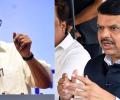
The Maharashtra government has requested information regarding the utilization of funds by the Vasantdada Sugar Institute (VSI), led by Sharad Pawar, prompting criticism from the NCP (SP). The government insists it's a routine process, while the opposition alleges political targeting.

'This festival season, advance airfares for major metros are up 20 to 25 per cent from last year.'

Cyclone Ditwah exits Sri Lanka after causing widespread destruction and over 120 deaths, heading towards the Indian coast. Heavy rains and high winds are expected to continue.

Stock markets will be driven by RBI's interest rate decision, tariff-related developments, global trends and trading activity of foreign investors in this holiday-shortened week, analysts said.

Rashtriya Janata Dal president Lalu Prasad Yadav's daughter Rohini Acharya on Sunday charged cohorts of her brother Tejashwi Yadav with accusing her of donating a 'bad' kidney to her father, 'in exchange for crores of rupees and a party ticket'.

'The frenzy for gold is primarily due to the uncertainty surrounding the tariff war.'

'Other sectors that manage the savings pools of Indians are giving tough competition to life insurance companies.'

Prime Minister Narendra Modi on Saturday claimed that people were not voting for the Rashtriya Janata Dal-helmed opposition in Bihar as they fear that if voted to power, its regime will 'put katta to their heads and order them to hold their hands up'.
